The Conflict You Can’t Walk Away From inside a Sealed Habitat — Lessons From Analog Astronaut Andrzej Stewart
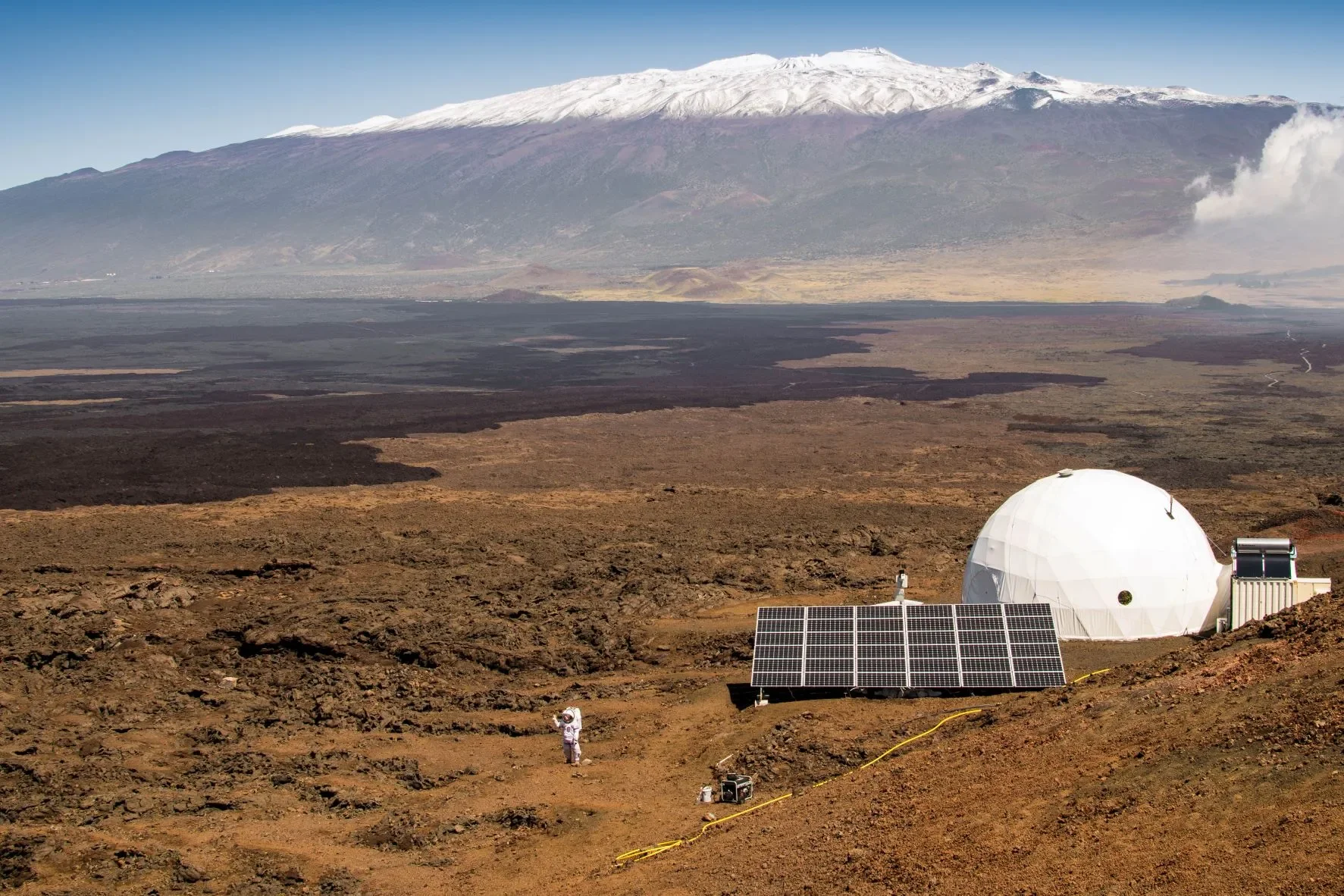
The HI-SEAS analog habitat on Mauna Loa, Hawai‘i — a sealed living environment surrounded by vast, uninhabited terrain.
Image credit: NASA
Sprints & Marathons
When Andrzej Stewart talks about analog missions, he’s lived in both types — short-duration and long-duration. His analogy for them creates the clearest psychological map of confinement I’ve heard yet.
Short missions, he said, are sprints.
Long missions are marathons.
And that difference changes everything.
Short Missions: Everyone at Their Best
On short missions — anything under two weeks — people can tolerate almost anything. Minor irritations stay minor. Habits that might normally grate on you become background noise. You can push through. People stay polite.
You’re still the “best version” of yourself, because you know the finish line is close. You can hold your breath, metaphorically and emotionally.
But the moment you cross into a long-duration mission, the psychology flips.
Long Missions: Where Real Patterns Emerge
On long missions, the feeling of being stuck doesn’t hit all at once — it crawls in slowly.
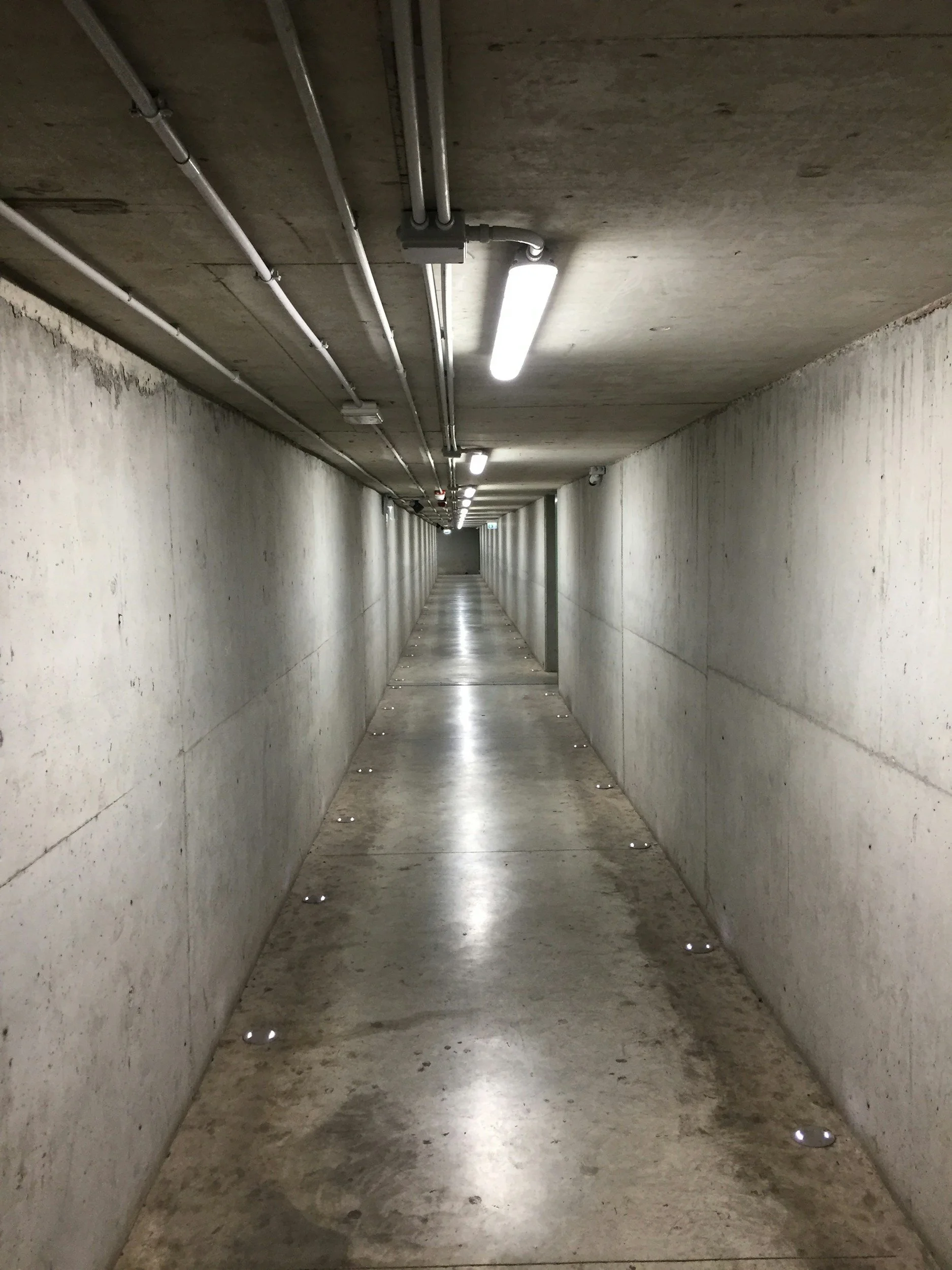
Conflict inside a habitat behaves like this tunnel — once it starts, it has nowhere else to go.
As Andrzej said, you will find things to disagree on.
You begin noticing things you didn’t see before.
Small disagreements sharpen.
Neutral habits become amplified.
The walls don’t move, and neither does the tension.
It reminded me instantly of early COVID lockdowns — when being confined with the same people for days and weeks changed the texture of relationships. The closeness made everything louder. The lack of escape made everything stickier. And honestly it doesn’t matter whether it’s family or friends.
That’s what happens in a sealed habitat.
And if there’s conflict, it doesn’t dissipate. It expands — even though the physical world around you has shrunk from miles to a bubble.
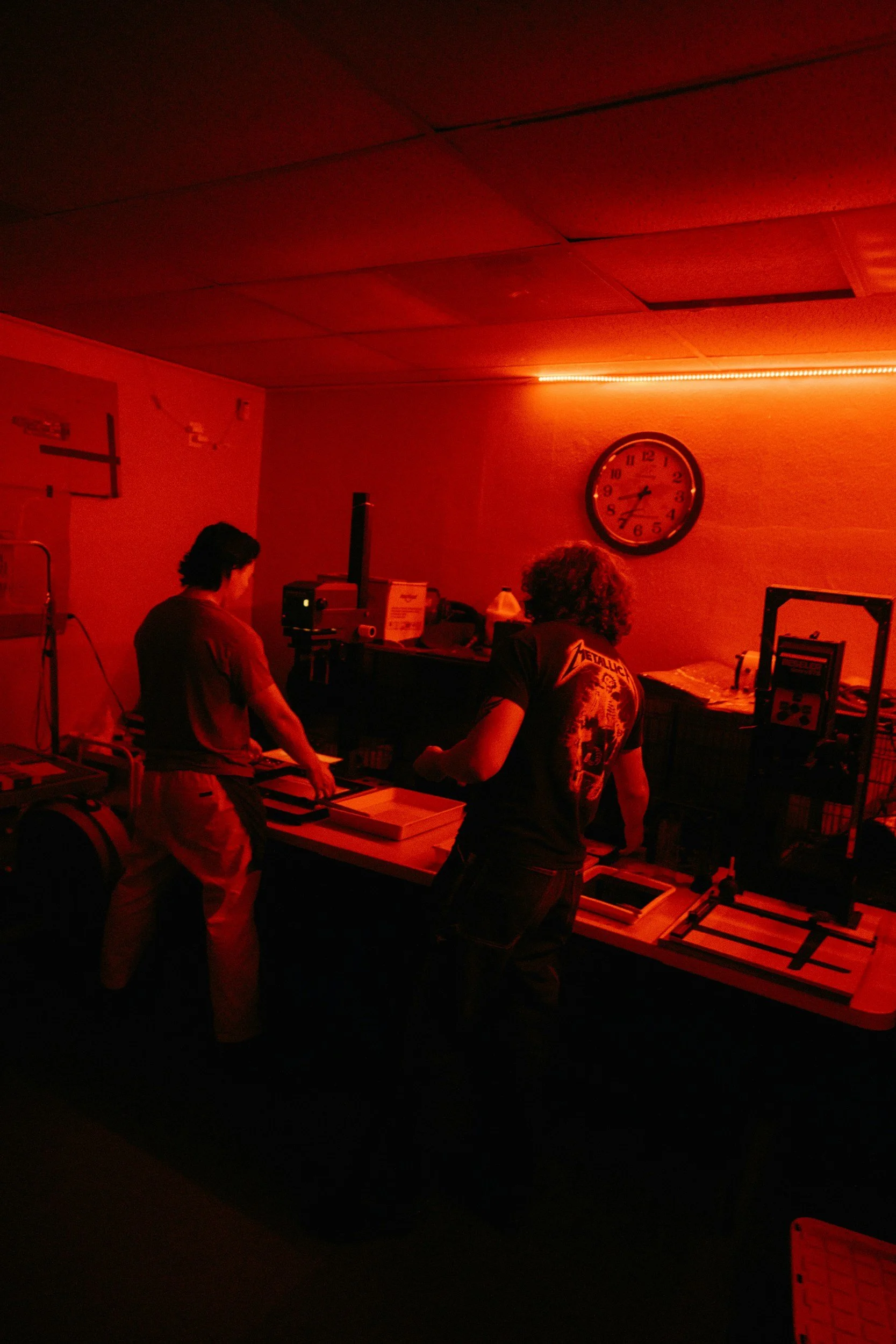
Routine tasks still require collaboration — even when tension is present.
The Necessity of Confrontation (Because You Can’t Leave)
In normal life, conflict is simple:
You step away.
You leave the room.
You take a walk.
You cool down.
You return to your ecosystem — friends, routines, distractions — and the tension dissolves.
But inside a confined habitat, avoidance is impossible.
You still have to interact.
You still have to cook together, do chores together, plan together, complete tasks together.
The mission doesn’t pause because you’re upset.
It was interesting to me how Andrzej referred to conflict as “it.”
And “it” will not go away — because there is nowhere for it to go.
It felt almost like a living thing.
So he learned to confront everything head-on. He dealt with issues as soon as they appeared. He didn’t let conflict linger — because lingering is exactly how it worsens and spreads.
Problems don’t disappear just like that. If you don’t face or acknowledge them, they grow. For him, acknowledging problems as they surfaced became essential. Something that stayed with him even after the mission.
Years later, he’s more direct, blunt, more honest, more willing to address tension instead of letting it ferment.
The environment changed his personality — for the better.
The Architecture of Conflict
Listening to him talk, I kept thinking about how other extreme environments handle emotional compression.
In some high-stress settings — places where intensity is constant — designers quietly build in a small space meant to absorb tension before it spreads. A pressure-release valve built directly into the architecture.
Analog missions don’t have anything like that.
And it made me wonder what a habitat might feel like if they did — something we’ll explore in the next article.
When emotional pressure builds, even the room begins to shape it. The next article explores how environments can absorb or amplify silence. And where that pressure could be released.
A Teaser for What Comes Next
Conflict inside a sealed environment is one kind of pressure.
Silence is another.
What happens when the world becomes too quiet?
What happens when sensory deprivation becomes its own form of tension?
And it made me realize something in my own interpretation that—despite their differences—both analog astronauts and trauma professionals need spaces to recalibrate. That connection is entirely my own, but it feels impossible to ignore and this parallel really stood out to me.
That’s where we’ll go next.

If you’d like to hear the full story in Andrzej’s own words, our conversation is on the Extreme Living podcast.
https://open.spotify.com/episode/5JZNjVQHCgKieq0qiWf501?si=0T1ZK4WQRg2woAc1fP25ZQ
